
I’m often asked how we got THEE Emmy-nominated actress Nava Mau and THEE legendary film and television director Cheryl Dunye to executive produce our project. I’d like to break it down, because there’s an incredible constellation of creatives who came together to make this project happen, and I feel like there are some takeaways for me and others.
As early-career filmmakers, there’s often a temptation to look to members of the industry with more visibility and influence to drive our work forward. Certainly that can be helpful–it’s been helpful in the case of our film. So is looking to the creatives who are already in your community, already in your corner, to be your most trusted collaborators.
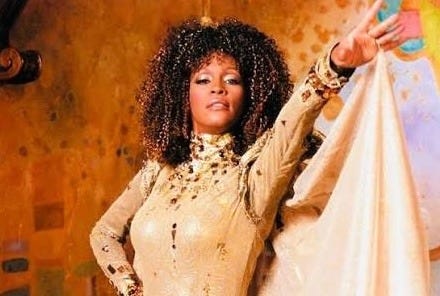
Here’s how we built a team of what I call “filmmaking fairy godmuthas”, and the lessons learned in the process:
Lesson 1: Everyone you need is probably already around you.
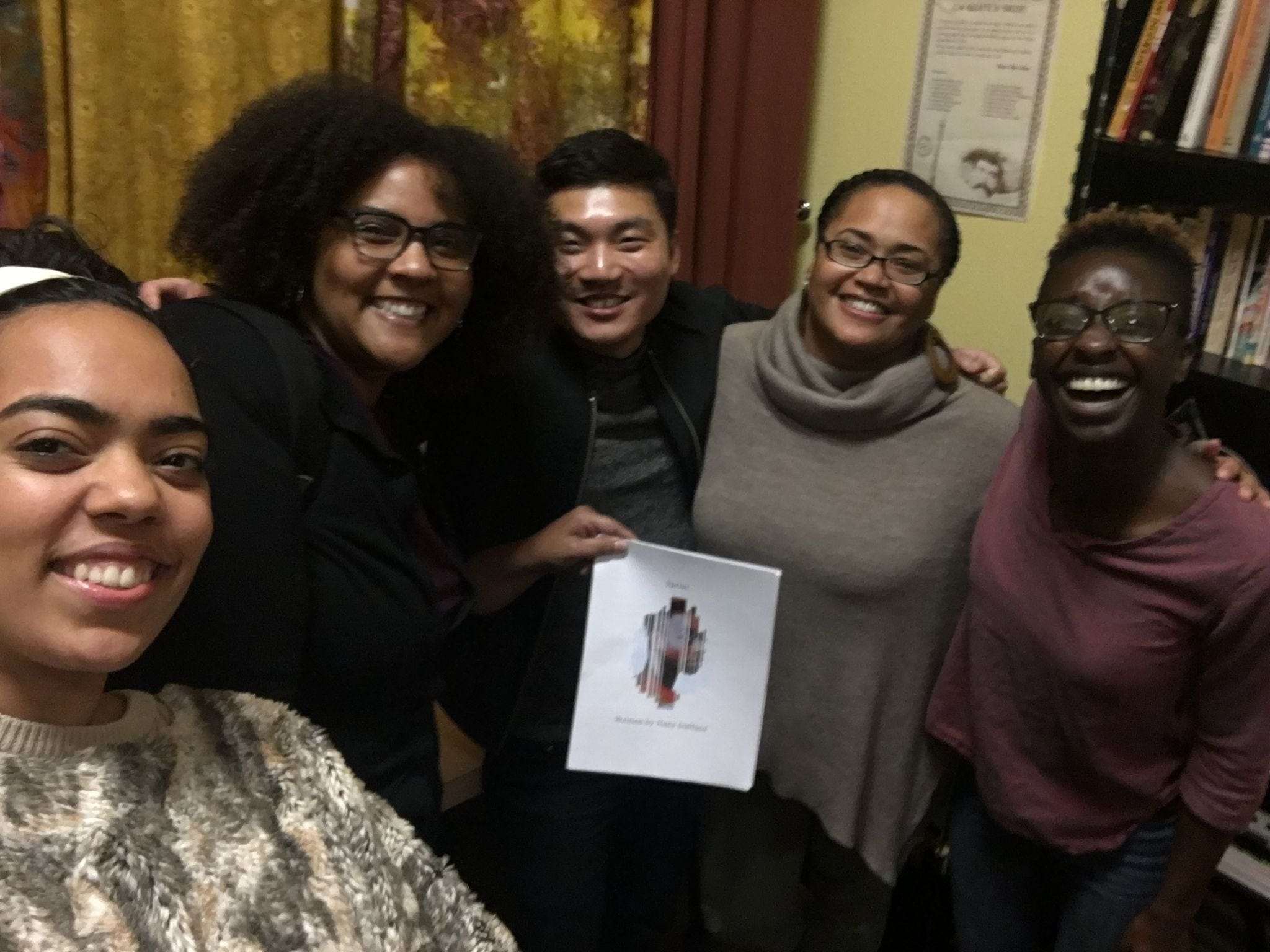
Around 2016, I wrote my first screenplay, Sprint. It was an earnest, messy autobiographical feature drawing from poems, anecdotes, and journal entries I’d collected over the years. When given the opportunity to adapt Sprint for the stage, I knew I wanted parts of the story to live on screen, but had no idea how to make a film. Thankfully, there were people in my community who did.
I connected with a group of friends in Oakland with filmmaking experience who rallied around Sprint. They would “borrow” equipment from their workplace on the weekend and return it before Monday morning, we’d hold auditions in our apartments, film in public spaces and locations donated to us from folks in our community. The whole process was scrappy and thrilling, and it’s how I fell in love with filmmaking. Nearly ten years later, many of these friends are the same people who rallied behind Rainbow Girls.
Sowj Kudva (Editor) - Was one of the first filmmakers I ever knew. They’re a brilliant editor with more than twenty years of industry experience. They’re also a dedicated mentor and educator. When I set out to make Sprint, Sowj connected me to filmmakers they’d worked with in Oakland, edited the footage, and was the first person to tell me, “hey, you should think about directing.” When it came time to make Rainbow Girls, I knew I wanted Sowj to edit. What I didn’t know was that Sowj would also be my introduction to key cast members, including two of the leads: Sis Thee Doll (as Angel), and Jai Stephenson (as Tati), as well as our sound mixer and composer, Saman Khoujinian.
Nurie Mohamed (Co-Producer) - Nurie was a mentee and former colleague of Sowj’s. Sowj connected us back in 2016 to work on Sprint, and we’ve been riding ever since. When I knew I wanted to return to the Bay to make Rainbow Girls, Nurie was one of the first people I called. In typical Nurie fashion, she was in without hesitation. Nurie, and our co-producer, Jackson Gravagno, became our boots on the ground in the Bay Area–scouting locations, hiring crew, and working to navigate every single production challenge thrown our way.
Nava Mau (Cast & Executive Producer) - I’ve known Nava since we met through a mutual friend watching Azealia Banks (pre-cancellation) perform at LA Pride. We go back back–so far back that a short I wrote and produced for Sprint, which Nurie directed, was Nava’s first on-camera acting experience. See how the dots are connecting here?
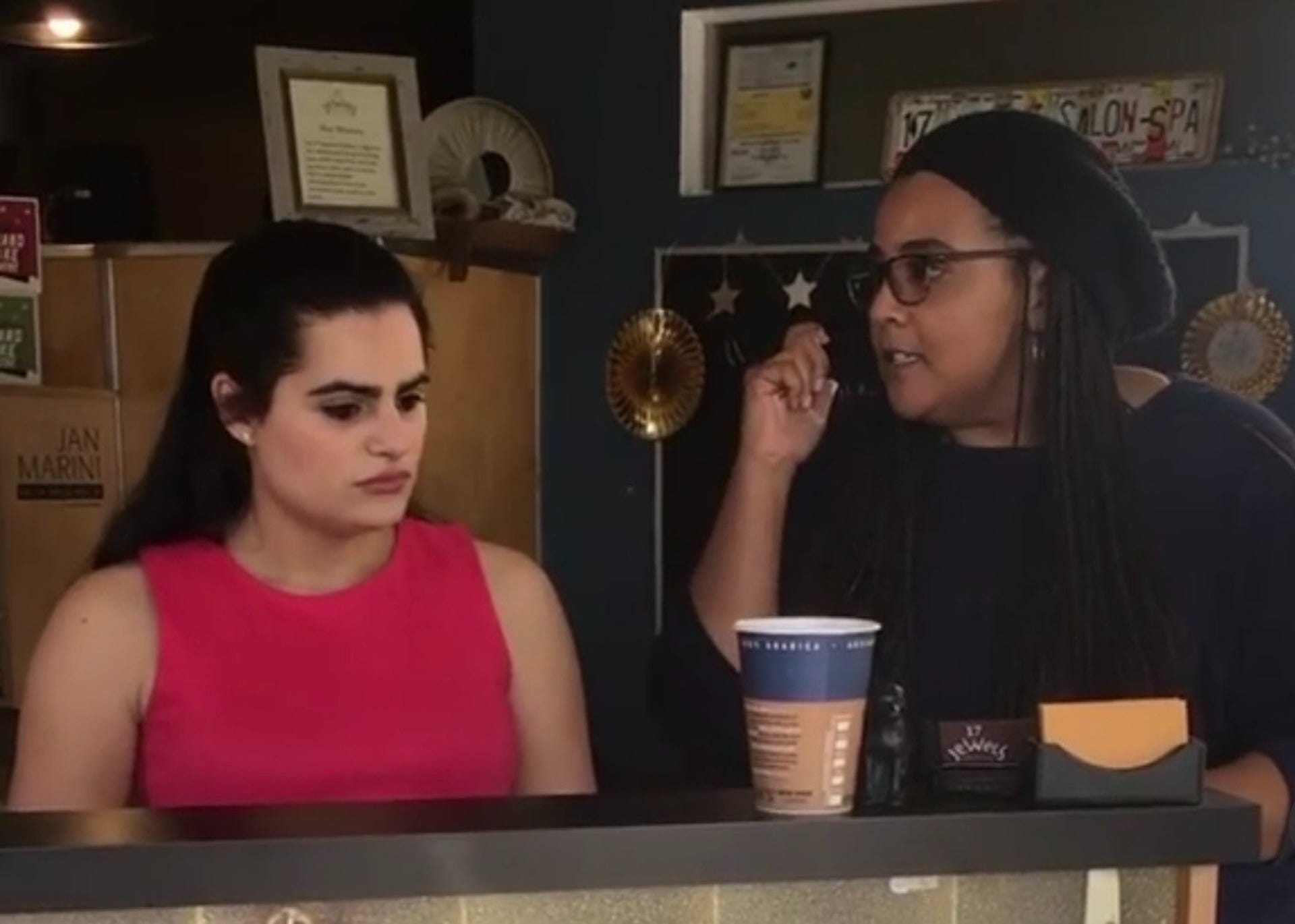
By the time I reached out to her about Rainbow Girls, my girl had been nominated for an Emmy for her breathtaking performance in Netflix’s Baby Reindeer. This time, I was a little intimidated to make the request. But one thing I’ma do is make the request! I sent Nava the script, and we met over a weekend while Nava was in New York for work. Over the course of that weekend, she provided invaluable script notes (that scene of Tati throwing a mannequin arm through the window–that was her idea!), joined the team as an executive producer, and from that point on, she did everything she could to move the project forward.
There’s nothing more satisfying than making art with your day ones. Sure, we may not all have Emmy-nominated actresses and people with decades of experience in our network. I get it. But we do have people around us with an abundance of talent and tenacity. I started making my first short films without the slightest clue how to make them. Sowj, Nurie, and Nava were by my side as I embarked on that process, and they were the same ones by my side as I made Rainbow Girls.
Lesson 2: Your friends have friends. Invite them to the party!
Raising money to make your project is often one of the biggest hurdles, and the most intimidating. For a long time I thought of fundraising for my projects as self-indulgent and a form of begging. It’s not. You are making something dope, and your community is filled with like-minded people who want to help. Invite them to the party!
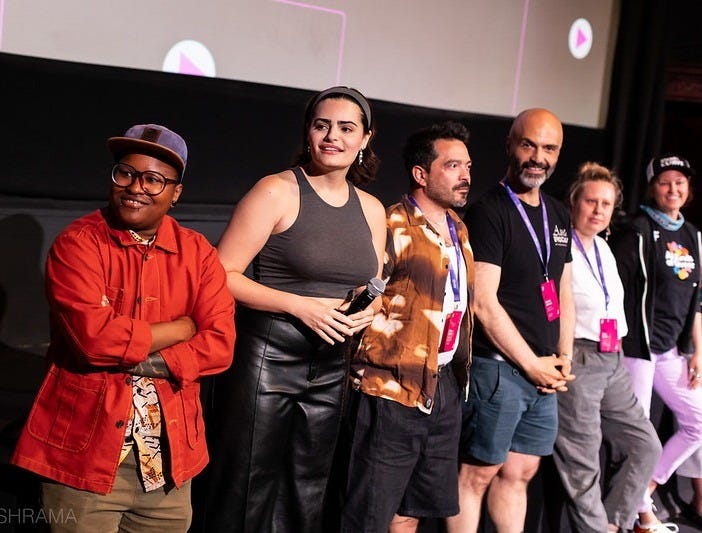
Our fundraising efforts began as most do, with a crowdfunding campaign. Rainbow Girls producer, Raman Nimmala (my Columbia Film school classmate) and I shot a fundraising video. Nurie and Jackson shot footage in the Bay Area that captured the tone, fun, and mischief of our project, and we started a Seed & Spark campaign. As the campaign progressed, Nava also made a fundraising appeal, sharing our crowdfunding campaign. Those efforts led us to:
Shane Zackery (Executive Producer) - Shane is a longtime friend of Nava’s who’d seen our campaign for Rainbow Girls and wanted to get involved. I’ll never forget sitting across from Shane and their partner, Aku, over dinner when they asked me the question every filmmaker dreams of but rarely ever hears: “Can I give you money?” Not only did they come on as an executive producer, they were on set with us every single day, doing everything from boom operating to capturing behind the scenes footage.
Remember, you are creating something dope, and people want to help. Invite them!
Lesson 3: Sometimes, it’s okay to cold email your dream EPs.
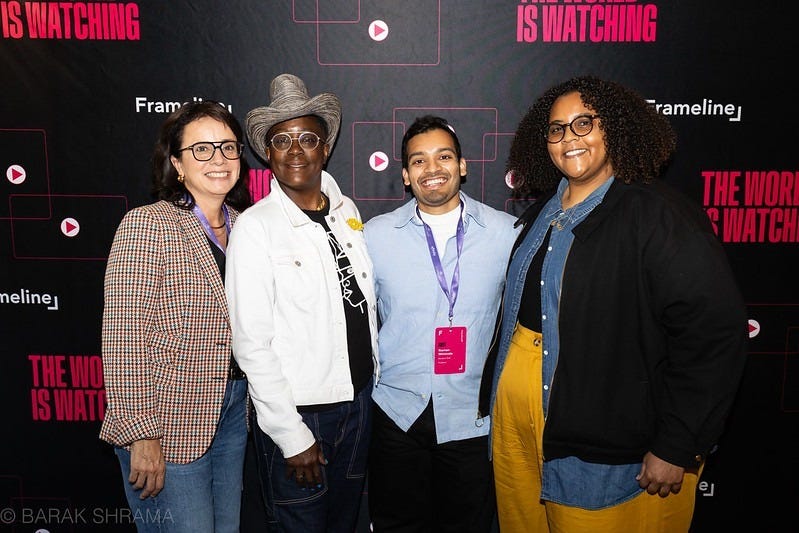
I love a good spreadsheet. My process lives and dies by them. Over the course of developing Rainbow Girls, Raman and I had created a spreadsheet listing production companies, philanthropic organizations, and corporations that may have some mission overlap with our film’s subject matter. I emailed every single one of them, including Jingletown Films–an Oakland-based production company founded by Cheryl Dunye. Most never replied, but Cheryl’s producing partner and head of the company’s Latinx division, Karina Hodoyan, did.
Karina Hodoyan & Cheryl Dunye (Executive Producers) - I remember Raman and I screaming at the top of our lungs when we received the response from Jingletown. Cheryl’s work represents such an important part of my and so many other aspiring filmmakers’ cinematic canon. She founded Jingletown Films to “amplify the voices of diverse storytellers and filmmakers whose work has historically been underrepresented in the film industry,” and I felt Rainbow Girls would be a project compatible with that mission. Thankfully, Karina and Cheryl felt the same. They provided resources and support in pre-production, post-production, offered insightful feedback on the editing process and have championed the film at every turn.
Sarah Schoellkopf (Executive Producer) - Another fairy godmutha brought to us by a cold email. Sarah sits on the Board of Directors of SFFilm and is a documentary film producer. I’d looked up every single board member at SFFilm on Linkedin, and reached out with a brief message introducing the project. Again, most never replied, but Sarah did. Raman and I sat across from Sarah at a coffee shop in San Francisco and pitched the project to her. Sarah contributed the last portion of funding we needed to go into production, and has become a friend and champion of Rainbow Girls ever since.
So get yourself a tight pitch deck and a spreadsheet filled with a list of organizations/people who you believe are a compatible fit for your project. Reach out and let them know why. You may get a bunch of no’s, you may not hear anything back, but you just might find a few filmmaking fairy godmuthas.
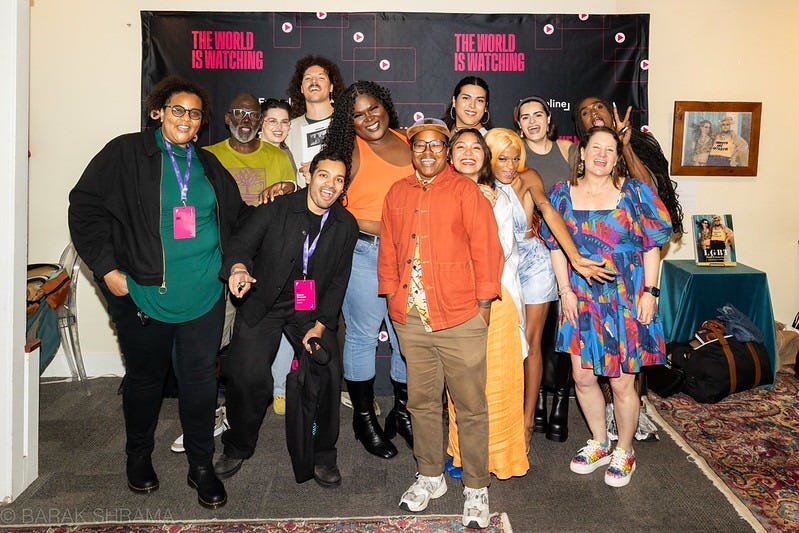
This is by no means an exhaustive list of the many hands behind the making of this film. But I wanted to uplift this particular collection of movers and shakers, because their intention is deliberate. Each of these people has made a conscious choice to support the work of filmmakers coming up in this industry who may otherwise be overlooked, and I am a beneficiary of their clarity of vision and commitment to action behind it. The lesson: When in search of a fairy godmutha, don’t look up. Look around you.
Pen down for now,

Excellent piece of writing Nana. I enjoyed reading it.